
Last updated October 16, 2026
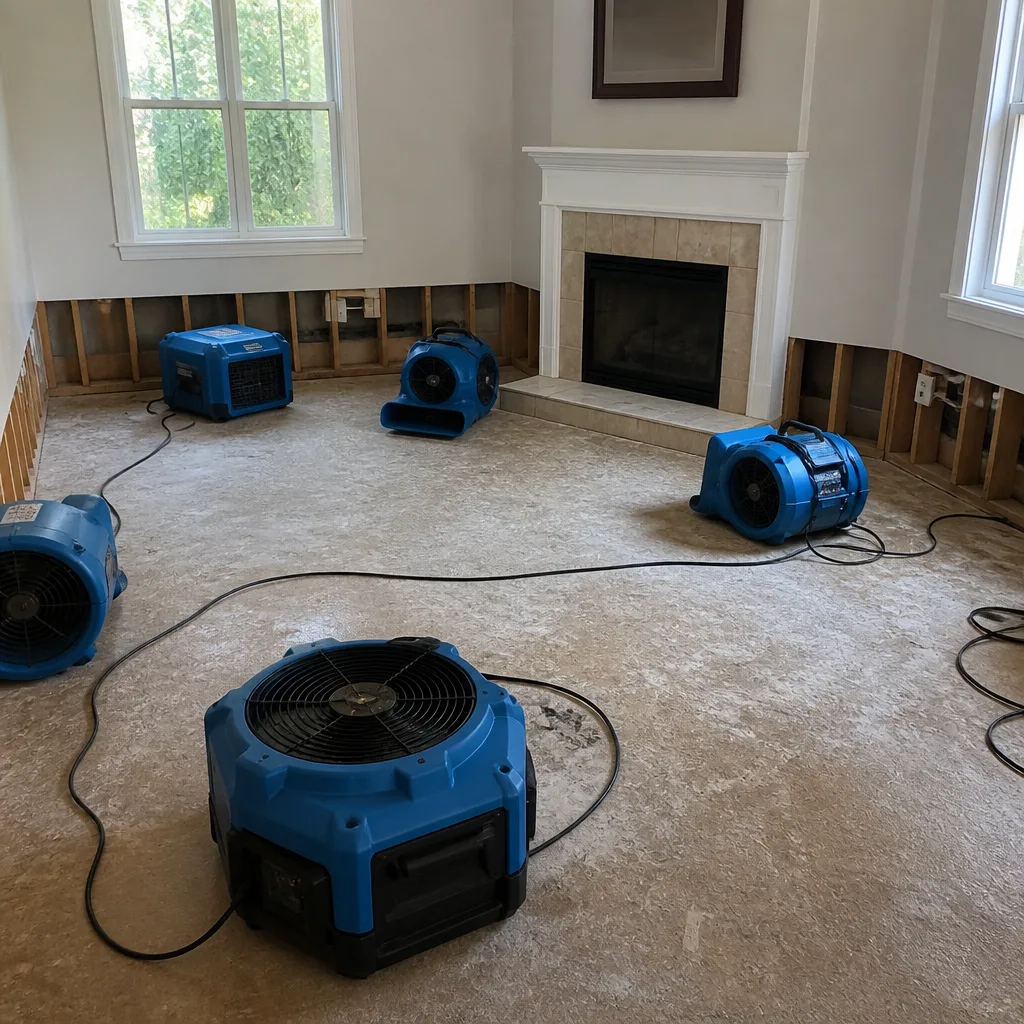 Water damage drying
 Fire & smoke cleanup
 Mold remediation
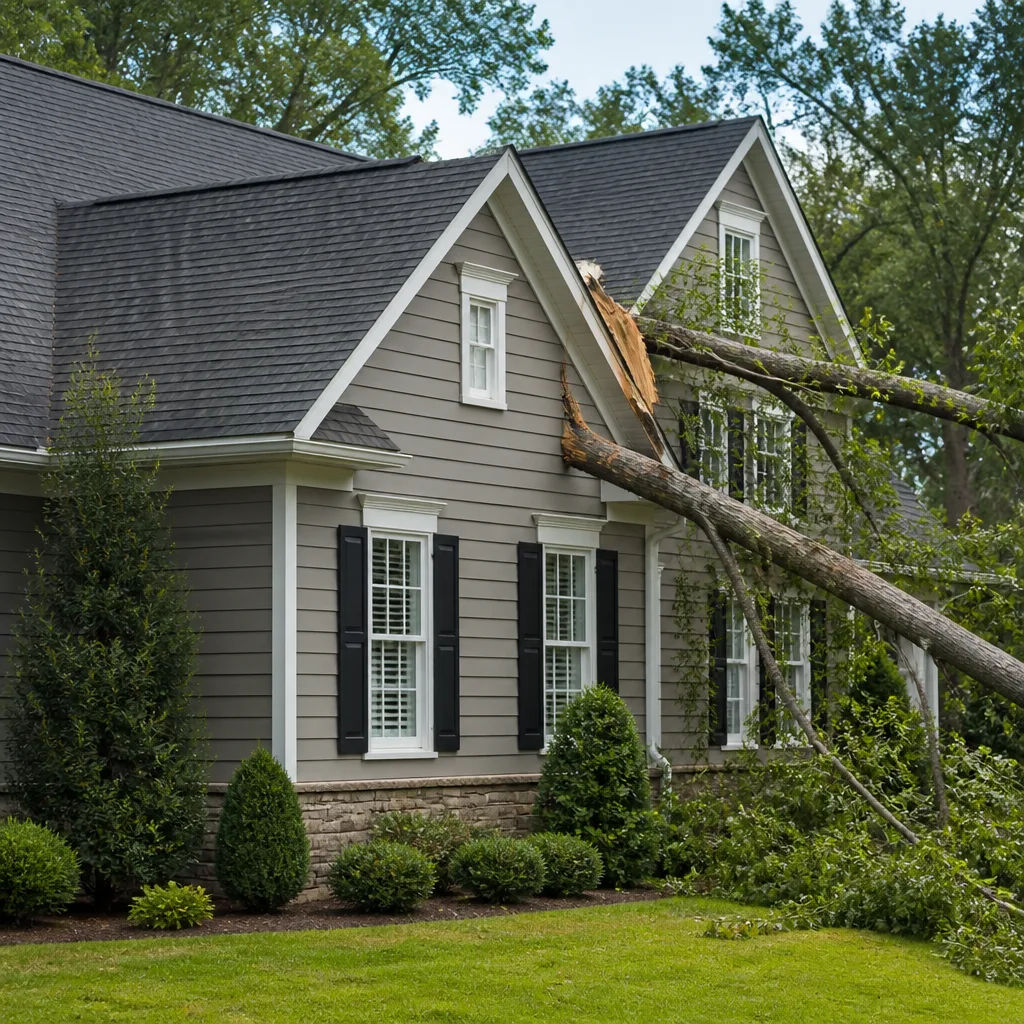 Storm response
 Sewage cleanup
 Reconstruction
Free visual inspection and a written scope of work before any mitigation begins - photos, moisture readings, and drying logs go in your claim file
The scope we write is the scope we bill. Anything new gets shown to you, in writing, before we touch it.
Get your free estimateDamage Restoration Warning Signs: A Torrance Homeowner’s Reference Guide
By the time mold is visible on a wall surface, IICRC S520 standards indicate the colony has typically been established for weeks. That means the warning sign most people know to look for is already a remediation event, not a prevention opportunity. This guide is built backward from the restoration job to the earliest detectable signal, so Torrance homeowners can act when intervention is still cheap rather than when it’s become structural. For year-round prevention strategies specific to Torrance’s climate, see our seasonal maintenance guide. You’ll learn the sensory sequence of detection, the Torrance-specific building materials that hide water damage, the moisture readings that separate cosmetic staining from active intrusion, and the insurance documentation that protects your claim.
Quick Answer
The earliest warning signs of water damage in a Torrance home are usually smells before sights: a damp, earthy odor or a sudden spike in your water bill often precedes visible staining by weeks or months. If you notice a musty smell that gets stronger near walls or floors, soft spots on drywall, or a water bill that jumped without explanation, you should investigate within 48 hours. Not sure whether to handle it yourself or call a pro? Read our DIY vs Professional Damage Restoration: The Torrance Homeowner’s Decision Guide. Early detection can mean the difference between a $400 drying job and a $14,000 remediation and rebuild.
Restoration work we handle
Table of Contents
- The Sensory Checklist: Smell Before Sight, Soft Spots Before Staining
- High Water Bills: The Financial Warning Sign Nobody Watches
- Torrance-Specific Indicators: Efflorescence on 1950s-1970s Block Foundations
- Moisture Meter Readings: The Number That Means Call Today
- Fire Damage Secondary Warning Signs: Smoke Odor, HVAC Particulates, and False Cleaning
- The Insurance Implication of Delayed Reporting
- Common Mistakes to Avoid
- When to Call a Professional
The Sensory Checklist: Smell Before Sight, Soft Spots Before Staining
Water damage announces itself in a predictable order, and it is rarely visual first. Understanding this sequence gives you the earliest possible warning. We have walked into hundreds of Torrance homes where the homeowner pointed at a ceiling stain and said “this just happened,” when the smell had been present for three weeks and the soft spot under the baseboard had been there for two.
Here is the order in which water damage typically reveals itself:
- Smell (day 1-14): A damp, earthy, or musty odor that gets stronger when you enter a room and fades when you leave. This is the first indicator because microbial activity begins in as little as 24-48 hours after water intrusion. The odor comes from volatile organic compounds released by mold and bacteria, and it precedes visible growth by days or weeks.
- Touch (day 7-21): Drywall that feels soft, spongy, or slightly cool to the touch. Baseboards that give slightly when pressed. Hardwood floors that feel uneven underfoot. These are signs that the material has absorbed water and is losing structural integrity.
- Sight (day 14-30+): Staining, discoloration, peeling paint, bubbling wallpaper, or visible mold. By the time you see these, the damage has typically moved beyond surface-level and into the wall cavity or subfloor.
- Structural (day 30+): Sagging ceilings, warped door frames, cracked tiles, or floors that slope. At this stage, the repair is no longer a drying job. It is a rebuild.
In Torrance specifically, the marine layer adds a complicating factor. Homes within three miles of the coast regularly see indoor relative humidity above 60% in the morning hours, which masks the smell of a small hidden leak. A damp smell that you attribute to “coastal air” may actually be a pinhole leak behind a bathroom vanity. The distinction matters: coastal humidity dissipates when the sun burns off the marine layer. A leak odor does not. If the smell is present at 2 p.m. on a dry day, it is not the weather.
This sensory sequence connects directly to our Water Damage Restoration in Torrance work. When we arrive at a home with a smell complaint and no visible staining, we use moisture mapping to find what the nose detected. The homeowner who calls at the smell stage is almost always looking at a smaller, faster, less expensive fix than the homeowner who waits for the stain.
High Water Bills: The Financial Warning Sign Nobody Watches
A sudden, unexplained spike in your water bill is often the first measurable sign of a hidden leak, and it is the one most Torrance homeowners miss because California American Water bills fluctuate seasonally. You expect a higher bill in July when the irrigation is running. You do not expect one in February.
Here is what to look for:
- A 20% or greater increase over the same month last year, with no corresponding change in household size or water use habits.
- A bill that stays elevated for two consecutive billing cycles. Seasonal spikes drop back down. Leaks do not.
- Your water meter spinning when everything is off. Turn off all faucets, ice makers, and irrigation. If the small triangular flow indicator on your meter is still moving, water is running somewhere behind a wall or under a slab.
The leak behind a high bill can be any of several building-system failures:
- Supply line pinhole leaks in copper piping, common in Torrance homes built between 1950 and 1985. Copper develops pinholes from water chemistry and age, and the leak often starts small enough that you never see water. It just runs inside a wall cavity.
- Toilet flapper failures that waste 200-400 gallons per day while being completely silent.
- Slab leaks in homes built on concrete slabs, which describes most of the housing stock in central and north Torrance. A slab leak can run for months before the water finds its way to a visible surface.
- Irrigation system leaks that dump water into the soil adjacent to your foundation, which brings us to the next section.
The high water bill is not just an expense problem. It is a diagnostic tool. If your bill is up and you cannot find the source, the water is going somewhere inside the building envelope, and that means hidden damage is accruing. Every week of an untreated leak adds drying time, demolition scope, and cost to the eventual restoration.
Torrance-Specific Indicators: Efflorescence on 1950s-1970s Block Foundations
Torrance has a distinctive housing stock. A significant portion of the single-family homes in neighborhoods like Old Torrance, Seaside, and the areas south of Lomita Boulevard were built between 1950 and 1975 on concrete block or raised foundations. That construction era and style creates a specific warning sign that generic homeowner guides never mention: efflorescence.
Efflorescence is the white, chalky, mineral deposit that appears on concrete block, brick, or mortar. It forms when water moves through masonry, dissolves salts and minerals inside the material, and carries them to the surface. When the water evaporates, the minerals remain as a white crystalline crust.
Here is what efflorescence tells you:
- Water is moving through your foundation wall or stem wall on a recurring basis. Efflorescence is not a one-time event. It forms over months or years of repeated wetting and drying cycles.
- The source is likely exterior grading, irrigation overspray, or a downspout discharging too close to the foundation. In Torrance, sprinkler systems that run in the early morning often soak the soil directly against the foundation. That water wicks into the block and carries minerals with it.
- Efflorescence itself is cosmetic, but the moisture driving it is not. Persistent water against a block foundation leads to spalling (the face of the block crumbling away), rebar corrosion inside filled cells, and eventually structural weakening of the footing support.
If you see white mineral deposits on the inside face of your foundation wall in a crawlspace, or on the exterior stem wall above the soil line, the fix is rarely just “scrub it off.” You need to correct the water source. That typically means regrading soil away from the foundation, extending downspouts, or adjusting irrigation heads. If the efflorescence is accompanied by a damp smell in the crawlspace, you may also need a sump pump, vapor barrier, or full crawlspace drying. Keegan Restoration Torrance has handled crawlspace drying jobs throughout Torrance where the homeowner initially thought the white residue was “just how concrete looks.”
Moisture Meter Readings: The Number That Means Call Today
Visible staining is not a reliable indicator of whether water damage is active or old. Drywall that got wet once, dried thoroughly, and never got wet again will often show a permanent stain that is completely inert. Conversely, drywall that is actively wet can look perfectly normal for weeks before it shows any discoloration. The only way to distinguish cosmetic staining from active moisture is a moisture meter reading.
Here is the threshold system we use in the field, and it is consistent with IICRC S500 guidance for water damage classification:
- Below 5% moisture content (MC) on drywall: Dry. Normal building material state in Torrance’s climate. No action needed.
- 5-12% MC on drywall: Elevated. This is the range where you see no visible stain but the material is holding more moisture than it should. Worth monitoring or investigating the source.
- 12-17% MC on drywall: Wet. This is the range where microbial growth becomes likely within 24-48 hours. The material needs drying, and the source of the water needs to be found and corrected.
- Above 17% MC on drywall: Saturated. The material is structurally compromised. Drywall at this moisture level will not return to its original condition after drying and typically requires removal and replacement.
A non-penetrating moisture meter reads moisture through the surface without putting holes in the wall, which makes it a useful first-line diagnostic tool for any Torrance homeowner. They are available at most hardware stores for under $50. If you press one against a stained area and it reads under 5%, the stain is cosmetic and the area is safe to prime and paint. If it reads above 12%, you have active water intrusion and should call a professional.
The number that means “call today” is 17% or higher on drywall, or any reading above 20% on wood structural members like studs, joists, or sill plates. At those levels, you are past the point of passive drying and into the territory where professional extraction and drying equipment is needed. We run Dri-Eaz and Phoenix drying systems on jobs where homeowners waited too long to check the numbers, and the difference in scope between a 12% reading and an 18% reading is often the difference between a two-day drying job and a full wall removal.
Fire Damage Secondary Warning Signs: Smoke Odor, HVAC Particulates, and False Cleaning
Most Torrance homeowners think of fire damage as a binary event: the fire happened, or it did not. But the secondary damage from smoke and soot behaves like water damage in one important way: it keeps working long after the visible event is over, and the warning signs show up in places that were never touched by flame.
Here are the secondary fire damage indicators to watch for:
Smoke Odor That Reappears in Humid Weather
Smoke particles penetrate porous materials: drywall, insulation, carpet, upholstery, ductwork. These particles bond with the material surface. When the air is dry, they stay locked in place. When humidity rises, as it does regularly in Torrance from June through August, the particles release and the smoke smell returns. If a fire occurred months or even years ago and you smell smoke again on a humid day, the original cleanup either missed the material or the decontamination was incomplete. This is a Fire Damage Restoration in Torrance situation, not a “light a candle” situation.
Black Particulates Coming Through HVAC Vents
If a fire occurred anywhere in the home, including a small kitchen fire, smoke moved through the HVAC system. The ductwork acts as a distribution network. Char particulates settle inside the ducts, and every time the system runs, it redistributes those particulates through the living space. The warning sign is a black, greasy film on vent covers, on walls near supply registers, or a fine black dust that returns within days of cleaning. Running the system without cleaning the ducts extends the contamination.
The Difference Between Cleaned and Decontaminated
A wiped-down surface is cleaned. That means visible soot is removed. A decontaminated surface has been treated to neutralize the smoke residue and odor at the particle level, using techniques that address what is absorbed into the material, not just what sits on top of it. The homeowner guide version of fire cleanup is “wipe it down with a degreaser and repaint.” The restoration version is: assess the extent of smoke penetration, clean or remove affected porous materials, seal what remains, and document every step because the insurance claim depends on it.
Our experience in Torrance: homes where the original fire cleanup skipped the HVAC system and the insulation almost always smell like smoke again within 18 months. The homeowner who got a “surface clean” from a general contractor ends up calling a restoration company anyway, after the odor returns and the original contractor is no longer answering the phone.
The Insurance Implication of Delayed Reporting
Here is the part of this guide that could save you a denied claim. Most HO-3 homeowners policies in California require “prompt notice” of a loss. The policy language does not usually define “prompt” in days, but California courts have interpreted it to mean “as soon as reasonably possible.” Insurance carriers argue, and courts sometimes agree, that a homeowner who noticed a warning sign and waited months to report it failed to mitigate the damage, and the carrier is not responsible for loss that could have been prevented.
This is not an abstract legal concern. Here is how it plays out in practice:
- The smell evidence problem: You noticed a musty smell in the guest bathroom in March. You called your insurance company in August, after the baseboard fell off and mold was visible. The adjuster asks when you first noticed the smell. Without documentation, you say March. The carrier argues you had notice in March, failed to act, and the mold growth between March and August is excluded as “continuous or repeated seepage” or “failure to mitigate.”
- The documentation defense: You noticed the smell in March. You wrote it down, took a photo of the area, and called a professional, who recorded a moisture reading of 13% and wrote up their findings. Then you called your insurer. Your documentation shows prompt, reasonable action. The claim is processed from the date of first evidence, and the carrier cannot argue you sat on the loss.
The single most valuable habit for any Torrance homeowner is this: when you notice a warning sign, document the date, take photos, and write down what you observed. A note on your phone today is admissible evidence in your claim six months from now. The absence of that note is an opening for the carrier’s attorney to deny the claim.
This is also why we document every job we perform to insurance-claim standards. When we arrive for a Mold Remediation in Torrance call, we record the moisture readings, the thermal imaging findings, the affected materials, and the scope of work, all in a format adjusters can review without back-and-forth. The documentation supports the claim and eliminates the he-said-she-said over when the damage was discovered and what was done about it.
Common Mistakes to Avoid
- Painting over a stain before finding the source. Kilz and two coats of semigloss will hide a water stain for about six months, and then the stain returns, darker and larger, because the water never stopped. You would not put a bandage on a cut without cleaning it first. Find the water source, fix it, dry the wall, then paint.
- Assuming the marine layer explains the smell. Torrance’s coastal humidity is real, but it dissipates by midday. A musty smell that persists through the afternoon is coming from inside the building envelope, not from the Pacific.
- Using a household fan to dry a wet area. A box fan circulates air, which helps evaporate surface moisture. It does not extract water from inside wall cavities, under flooring, or behind baseboards. What cannot evaporate into the room air stays in the material and feeds mold. Professional drying uses desiccant or refrigerant dehumidifiers and controlled airflow to move moisture out of the structure, which is why we run XPOWER, B-Air, and Injectidry systems rather than telling homeowners to open a window.
- Ignoring a high water bill because “the kids must have taken long showers.” Two teenagers taking 20-minute showers adds maybe 40 gallons a day. That does not produce a $150 bill increase. A running toilet or a slab leak does. Check the meter before you blame the kids.
- Skipping HVAC cleaning after any fire, even a small one. Smoke moves through ductwork. Every time the system runs, it redistributes contaminants. A surface clean that skips the ducts is not a completed fire restoration.
- Waiting to call a professional because “it’s probably nothing.” The homeowner who waits through the smell stage, the soft spot stage, and the staining stage has transformed a $400 drying job into a $14,000 remediation. The math is straightforward. Early calls are cheaper calls.
When to Call a Professional
Call a restoration professional the day you notice any of these conditions: a musty smell that persists for more than 48 hours, a moisture meter reading above 12% on drywall, visible mold larger than 10 square feet, water staining that is actively damp to the touch, any water event that has been present for more than 24 hours, or smoke odor that returns in humid weather. These are not DIY situations. They require professional extraction, controlled drying, and documentation that supports an insurance claim.
Keegan Restoration Torrance offers free estimates in Torrance. Call (424) 323-4271 and a live person answers, 24 hours a day, including nights, weekends, and holidays. The price goes in writing before any work starts, and every repair is backed by the 365-Day Done Right Promise: if it is not done right, we make it right, in writing, at no charge, for a full year.
See the difference
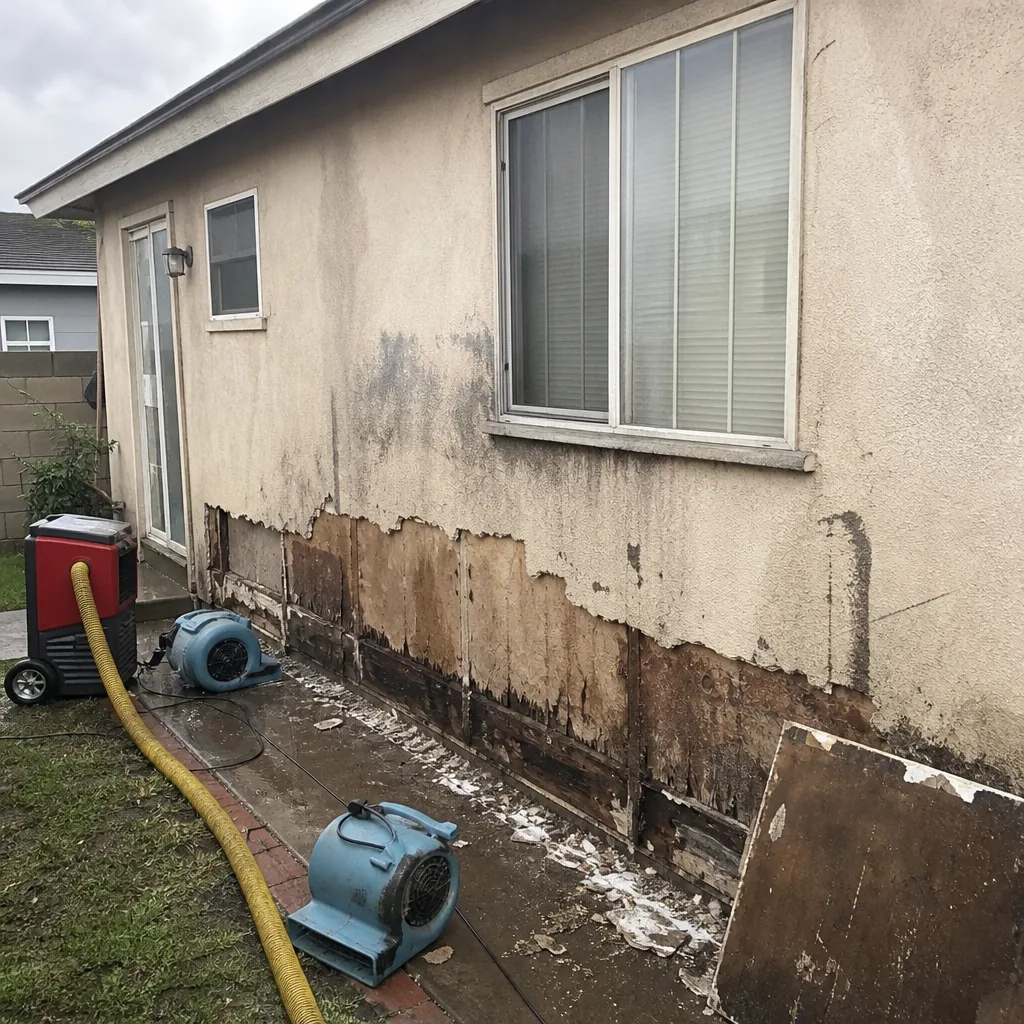 Before
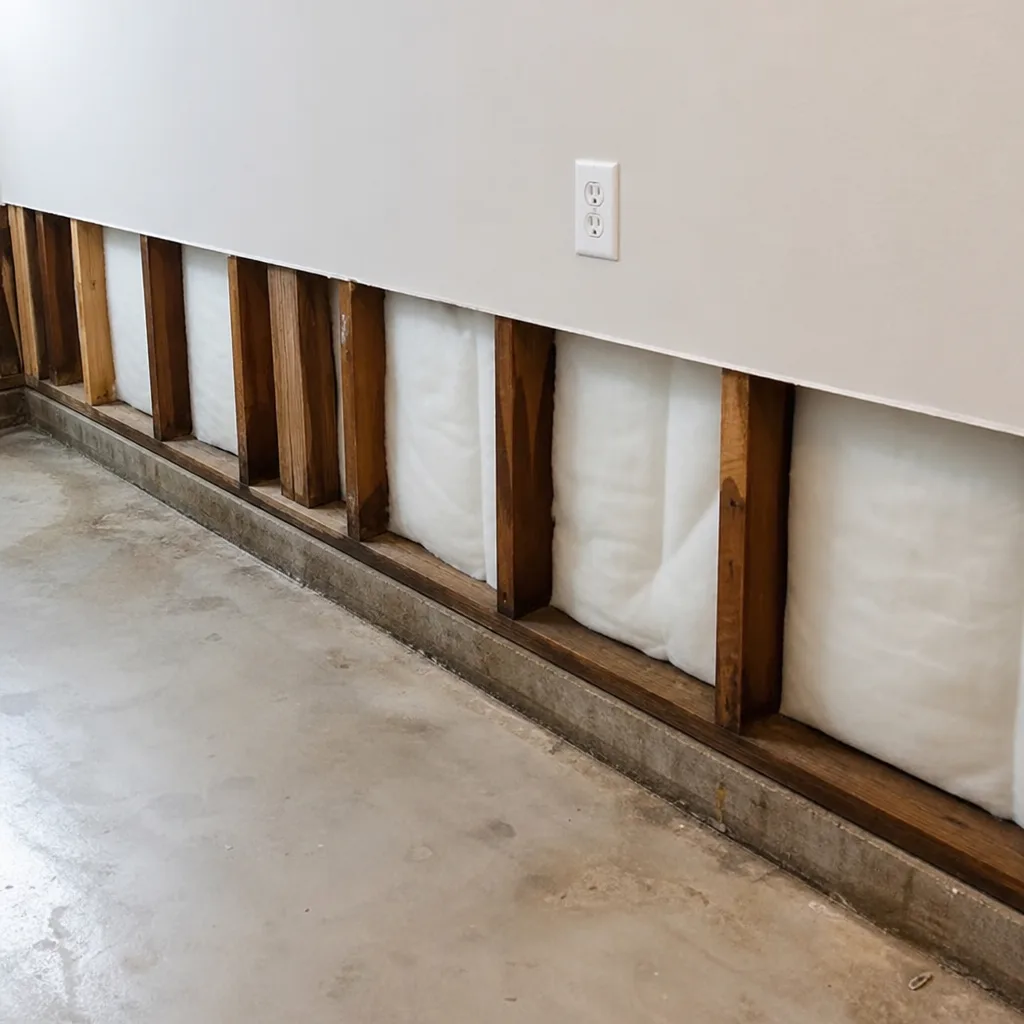 After
After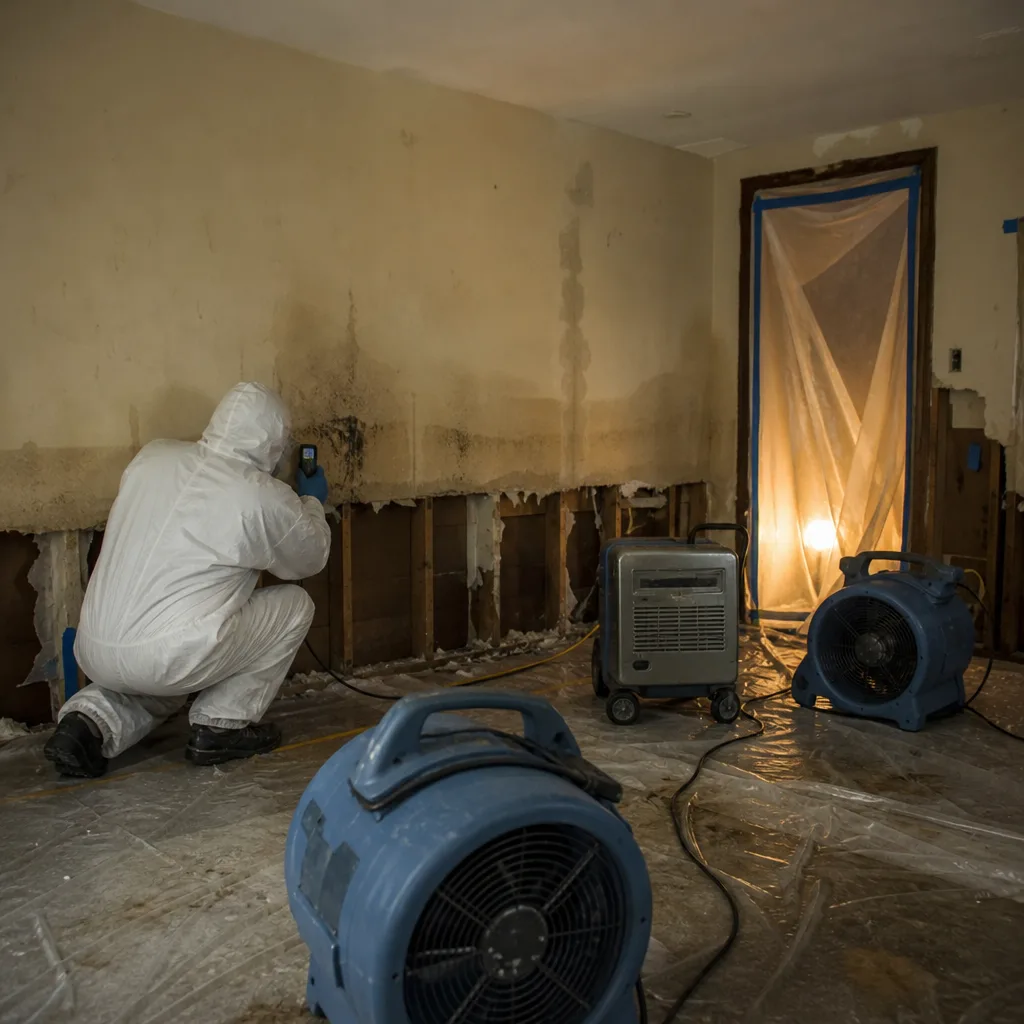 Before
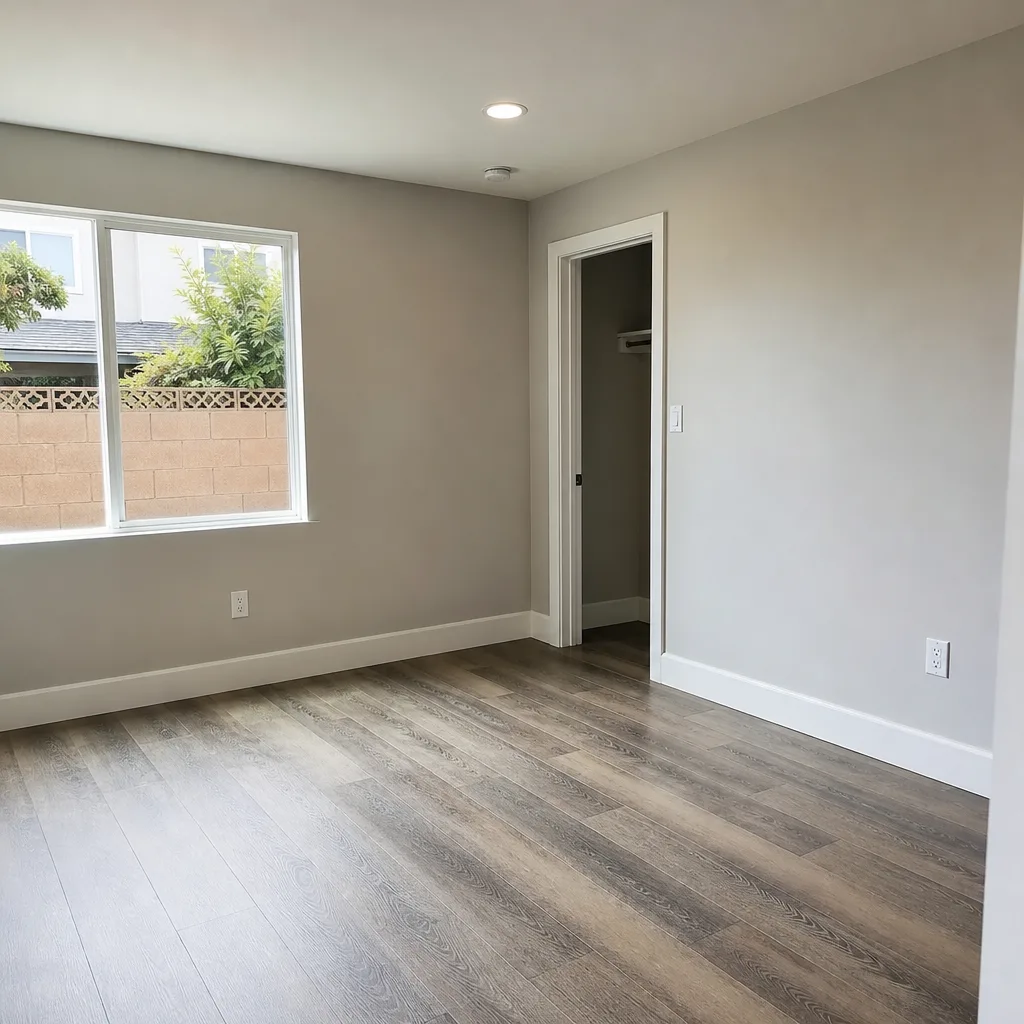 After
After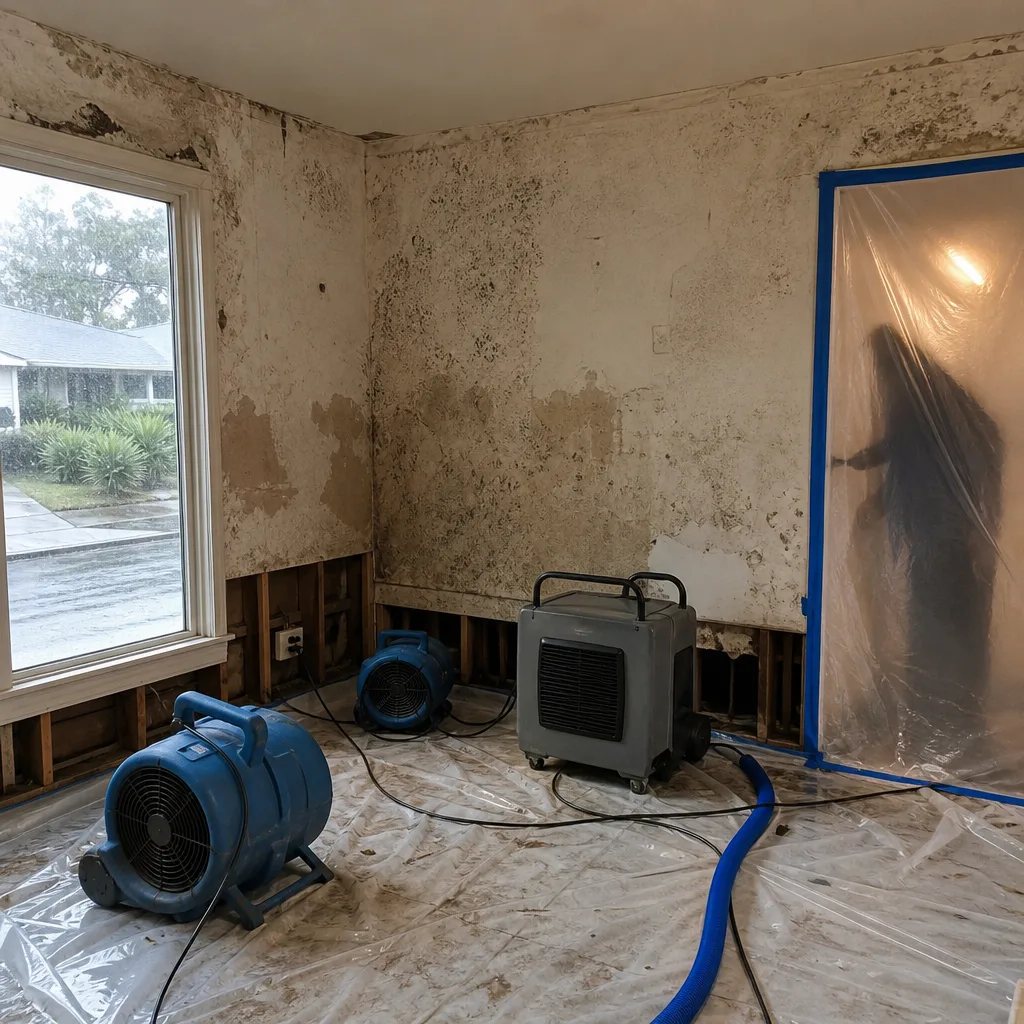 Before
 After
AfterFrequently Asked Questions
The first signs are typically a musty or earthy smell that persists through the day, a soft or spongy feel to drywall or baseboards, and a water bill that spiked without explanation. Visible staining and mold are late-stage indicators that appear weeks after the water intrusion began.
Water damage restoration in Torrance typically ranges from $400 to $2,500 for a contained leak with drying only, and $3,000 to $15,000 or more when demolition and rebuild are required. The final number depends on the affected square footage, the category of water, and how long the water has been present. Call (424) 323-4271 for a written estimate based on your specific situation.
Insurance may deny or reduce a claim if the carrier can prove you knew about the damage and failed to act promptly. Document the date you first noticed any warning sign, take photos, and contact your insurer right away. Prompt notice and documented mitigation are the two things that protect your claim.
A household fan circulates room air but does not extract moisture from inside wall cavities or under flooring. Water trapped inside building materials will remain there and support mold growth. Professional drying requires controlled dehumidification and airflow management to actually remove the water from the structure.
White, chalky deposits on concrete block or brick are efflorescence, which means water is moving through the masonry and depositing minerals on the surface. It indicates a recurring moisture problem, typically from irrigation overspray, poor drainage, or downspouts discharging too close to the foundation in Torrance’s dense 1950s-1970s construction.
Smoke particles penetrate porous materials like drywall, insulation, and ductwork. These particles release when humidity rises, which is why the smell returns in Torrance’s humid summer months. A surface cleaning that did not address the absorbed contaminants or the HVAC system is not a completed fire restoration.
The Bottom Line
The warning signs that matter most are the ones you notice before anything looks wrong. A smell before a stain. A soft baseboard before a bubbling wall. A water bill spike before a visible leak. Efflorescence on a block foundation before the footing fails. A moisture meter reading above 12% while the wall still looks fine. If you live in Torrance, you live in a housing stock and climate that hides water damage longer than most. The homeowner who acts at the first sensory signal is the homeowner who spends hundreds instead of thousands. Document what you notice, call early, and get the price in writing before anyone touches your home. That is how restoration should work, and it is how we run every job at Keegan Restoration Torrance home.
Written by Shane Pruitt, Owner at Keegan Restoration Torrance, serving Torrance since 2005.